Pages

Monday, May 2, 2016

What is the modern consensus in Psychiatry regarding the efficacy of anti-depressants vs placebo?

What is the modern consensus in Psychiatry regarding the efficacy of anti-depressants vs placebo?


What is the modern consensus in Psychiatry regarding the efficacy of anti-depressants vs placebo?

Posted: 01 May 2016 09:24 AM PDT

I didn't even know until recently that for at least a decade there has been something of a controversy over whether the effects of anti-depressant medications on depression can be chalked up entirely to placebo or not, sparked mainly by work by Irving Kirsch who seems to be on a bit of a crusade against anti-depressants. I had taken it for granted until now that obviously they must have some active effect.

I've tried to make sense of the controversy by reading what I can of Kirsch and the responses but a lot of it goes over my head. It seems like it's generally acknowledged that anti-depressants usually have a very modest effect except in extreme cases where they can have a serious effect? It's hard for me to find much actual sources on this to read however which are not the standard stuff about the evils of big pharma trying to poison our brains.

submitted by /u/Akton
[link] [comments]

Can modern chemistry produce gold?

Posted: 02 May 2016 05:02 AM PDT

reading about alchemy and got me wondered.

We can produce diamonds, but can we produce gold?

submitted by /u/koreankiwitea
[link] [comments]

In terms of "brain health", does reading, chess, and other "smart" activities actually do anything of benefit to the brain? Likewise, wouldn't cardio be beneficial to overall health for the brain?

Posted: 01 May 2016 06:48 AM PDT

As I understand, neurons in the brain die with age, and they don't come back (or if they do, in a limited way). As a kid, I always heard that playing video games/watching TV would "melt" my brain (which doesn't seem right). Meanwhile, activities such as chess, or card games, or reading are suppose to be "good" for the brain. How exactly are some activities good for the brain, and what is the mechanic within in the brain that makes these tasks helpful to the brain?

Likewise, in terms of overall brain health, wouldn't cardiovascular exercises help your brain? As I understand, parts of the brain receive blood from veins (capillaries?), and this provides oxygen to brain cells, which is important to their overall health. Do I have this right, and if so, do we know how cardiovascular exercises overall brain health?

Thanks!

submitted by /u/Reflektor18
[link] [comments]

Einstein explained gravity as a distortion of space-time due to mass. Where does the graviton fit in?

Posted: 01 May 2016 07:29 AM PDT

A particle and a distortion of space-time continuum seem to be two opposing explanations for gravity.

submitted by /u/paleRedSkin
[link] [comments]

If I were to analyse the DNA of a newborn baby, and then wait 80 years before analysing that person's DNA once more, how genetically dissimilar might I expect the two samples to be?

Posted: 01 May 2016 06:39 AM PDT

Why do adults need hormones like estrogen, progesterone and testosterone, but children can live with low levels of them all the way until puberty?

Posted: 01 May 2016 08:26 PM PDT

How does a boomerang work?

Posted: 02 May 2016 04:34 AM PDT

Do different languages compel native speakers to think in different ways?

Posted: 01 May 2016 07:50 PM PDT

Some linguists, such as Noam Chomsky, believe language is the basis of cognition. If language is the tool kit by which we think, is it possible that differences between languages give rise to differences in thought in native speakers? In other words, is it poosible that a Bantu speakers might have a better grasp on some concepts than English speakers or vice versa due to particular aspects of their respective languages?

submitted by /u/ienjoyapples
[link] [comments]

Why do fans always always go off-high-medium-low and not off-low-medium-high?

Posted: 01 May 2016 01:07 PM PDT

I always hate that I can't tell if a fan is off or not and always end up pulling the cord like 20 times over and over again trying to figure out if it's off or not. Wouldn't it make the most sense to have it go from the loudest and most obvious setting (high) to the off position? Is there something with the design of fans that prevents this?

submitted by /u/StankCheez
[link] [comments]

What does it mean to understand something or not understand it? What's going on in the brain and conscientiousness that allows this to happen?

Posted: 01 May 2016 07:55 PM PDT

When I look at a math problem and don't understand it, why don't i understand it?

When I look at a science problem i generally can understand it.

What goes on in the brain/inner thoughts that allow you to hit the wall or jump over it mentally?

submitted by /u/PuckTheBruins
[link] [comments]

How does a bat construct its airfoil and is a fused clavicle beneficial for flying?

Posted: 01 May 2016 09:02 PM PDT

What accounts for the ability of slow cooker liners to not melt or stretch extensively under such heat?

Posted: 01 May 2016 07:12 PM PDT

New studies link anticholinergic drugs to increased risk of brain damage in elderly people... Is there evidence of similar effects in younger people? Is there any reason why these drugs would be fundamentally safer for non-elderly people?

Posted: 01 May 2016 07:33 AM PDT

How does a cloaca filter excretion waste and sexual fluids in Reptiles/Amphibians/Birds?

Posted: 01 May 2016 09:01 PM PDT

How does this little plastic piece make patterns when you shine a laser through it? Shouldn't the laser just be diffused?

Posted: 01 May 2016 12:36 PM PDT

What makes the Fibonacci Sequence so "special"? Couldn't you find similar patterns with any arbitrary set of operations between numbers?

Posted: 01 May 2016 04:40 PM PDT

I was watching this Numberphile video and it got me thinking. The patterns he talks about don't really seem all that surprising to me. If you started performing the same operations over and over again in a set manner with numbers, you're bound to start seeing patterns. What makes this particular set of operations (adding the previous two to get the next) so special?

submitted by /u/sts816
[link] [comments]

How are we able to understand misspelled words?

Posted: 01 May 2016 06:28 PM PDT

How and why are we able to see past typos and understand what they originally mean, instead of pausing and asking ourselves what this new word is? For example if you see "spellig", you'll most likely think the original word was supposed to be "spelling", especially if it were in the context of a sentence. If we can differentiate between visual shapes (we know a square is a square, and not a triangle), then what is different in this case? And finally, to what extent would we no longer be able to recognize a typo from the intended word?

submitted by /u/Thegreatmochi
[link] [comments]

If a baby were to be placed near the edge of a cliff, would it know not to fall off?

Posted: 01 May 2016 09:48 AM PDT

If so, how would it know? If not, when does this skill develop and how does it work?

I'm assuming this experiment hasn't been conducted before, and for good reason.

submitted by /u/preetcolors
[link] [comments]

Why is it more difficult to move my fingers when they're cold?

Posted: 01 May 2016 03:40 PM PDT

For example: after jogging in the rain or walking around without gloves in winter?

My fingers are unable to grip as hard as they normally can and my motor skills aren't as precise. (I've noticed this while gaming, like this guy.)

submitted by /u/VladymyrPutin
[link] [comments]

In the movies, when someone is shot directly in the head, they die instantaneously. How true is that? Also, why is it that we die so quickly from something entering our brain?

Posted: 01 May 2016 06:12 AM PDT

How well would a bird fly in zero-g?

Posted: 01 May 2016 06:39 PM PDT

How well would a bird fly in zero-g? Would smaller birds fare better than larger birds? Would hummingbirds be better or worse than other birds? Has this been done before?

submitted by /u/memercopter
[link] [comments]

If we place a perfect sphere on a flat surface, how much of the sphere touches the surface?

Posted: 01 May 2016 04:13 PM PDT

Sunday, May 1, 2016

If I were to drop an object, a bowling ball, down an infinitely long vacuum tube, what speed could it reach?

If I were to drop an object, a bowling ball, down an infinitely long vacuum tube, what speed could it reach?


If I were to drop an object, a bowling ball, down an infinitely long vacuum tube, what speed could it reach?

Posted: 30 Apr 2016 05:39 PM PDT

Given that an object can't travel faster than the speed of light and that there is no resistance which of these two overrides the other?

submitted by /u/FrenchButcher
[link] [comments]

Why does my congestion go away when my body is in hot water?

Posted: 30 Apr 2016 09:34 PM PDT

I'm extremely congested most of the time and have found that immersing my body in hot water really alleviates my congestion. There's no real steam in the room, so what is it that's making it so much easier for me to breathe?

submitted by /u/burf
[link] [comments]

How or why does moon sometimes appear bigger and in different colour?

Posted: 30 Apr 2016 06:16 PM PDT

Can sound be used as a catalyst for chemical reactions?

Posted: 30 Apr 2016 01:41 PM PDT

Is the Gravitational Constant "constant" as the Universe ages and expands?

Posted: 01 May 2016 06:42 AM PDT

Is the Gravitational Constant of today the same as that of the one from right after the Big Bang and will it be the same value in 10 billion years?

submitted by /u/sldfghtrike
[link] [comments]

Would flames be shorter/taller under higher/lower gravity?

Posted: 01 May 2016 04:47 AM PDT

If I had a bio dome on the moon and made a bonfire would the flames be taller because of the lower gravity? Would you see a clear difference? What about on a huge planet? Or the sun? Does a bio dome bonfire on the sun have short little flames?

submitted by /u/cheeseismurder
[link] [comments]

Why are alpha particles stable?

Posted: 01 May 2016 06:23 AM PDT

Why don't radionuclides emit particles of made 4 neutrons? What makes the alpha particle arrangement more energetically favourable than a neutron analogue?

submitted by /u/moisttoejam
[link] [comments]

If the moon is geologically dead, how will we find metal ores and what will their concentrations be like?

Posted: 01 May 2016 12:54 AM PDT

Clarification:

On the moon, rocks tend to be about half silica with mineral impurities of aluminate (up to 30%), Ilmenite (up to 10%), and Ferrous oxides (up to 15%). The concentration of these minerals would not make them profitable to produce metals from by earth standards, where we tend to use ores like Magnetite (70%+) Goethite (60%+), and limonite/siderite (40%+) for pig iron production.

Hematite, Magnetite, and Goethite are mostly formed by interactions with water. Since the moon has no water to form sedimentary strata, would it stand to reason that the Moon's iron would not form concentrated ores like this?

Chalcocite and Chalcopyrite are mostly found in igneous rocks. Since the moon is not geologically active, would these crystal formations be present? Would veins of copper-bearing crystals have formed during the initial cooling after the impact even that created the moon?

Assuming the moon has no sedimentary deposits, we're excluding all alluvial and stratiform ores, all hydromagmatic deposits, all hydrothermal deposits, and all epigenetic deposits. This means zero metasomatic deposits as well, right?

Does this mean the only metals we will find are astrobleme related, or magmatic, I'm guessing?

Due to a lack of magmatic dynamism in the Moon's history, would this mean that the moon's metal deposits would have sunk to the core during formation, or would they have been left interspersed with the crust?

submitted by /u/PM_ME_JAR_JAR_NUDES
[link] [comments]

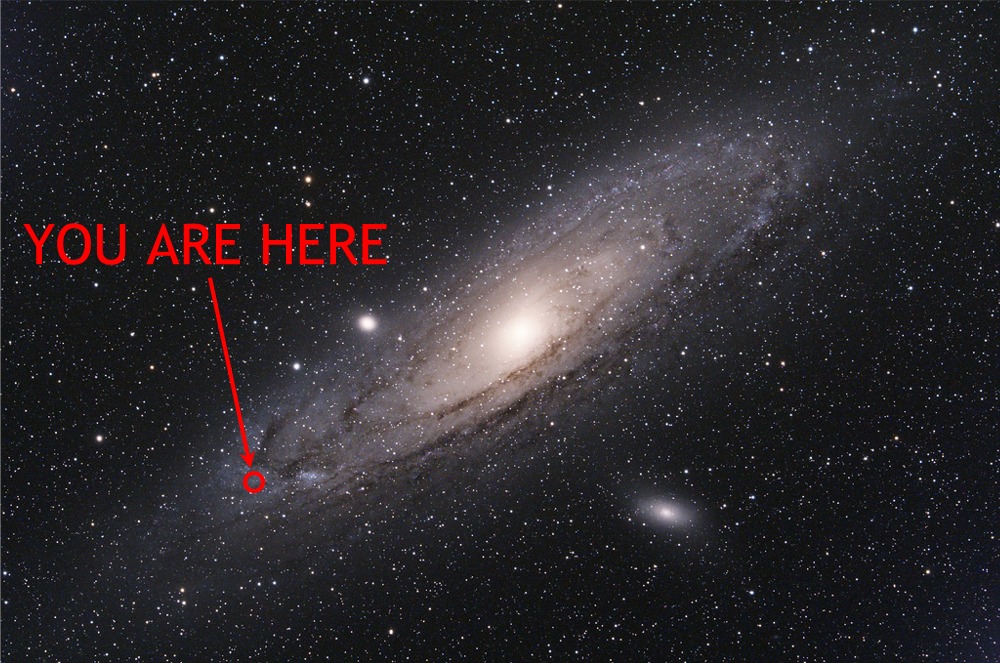
How do we have pictures of Milky way?

Posted: 01 May 2016 01:15 AM PDT

What's the cardinality of negative infinity to positive infinity?

Posted: 30 Apr 2016 06:32 PM PDT

That is, the set of integers between negative and positive infinity. Is it equal to aleph-null? It seems like it should be bigger than the set of natural numbers.

submitted by /u/gprime312
[link] [comments]

Why is it considered easier to hit a home run on a ball traveling faster rather than slower?

Posted: 30 Apr 2016 01:06 PM PDT

I watch baseball and I've heard them mention that the fact that it's a fastball made it go far enough to go over the wall.

submitted by /u/sixarmedOctopus
[link] [comments]

A balloon filled with helium goes in the opposite direction of earth's gravity. Not only does it overcome the force, but it also travels up. What would happen to a balloon in deep space? Would the helium stay put or would the balloon split and the helium go in all directions?

Posted: 30 Apr 2016 08:23 PM PDT

What does a colorblind person see in a room with only red light?

Posted: 30 Apr 2016 11:10 AM PDT

For example, a darkroom for photo developing with only pure red light. Would the room appear to have the same amount of "lightness" but appear gray in color? Or would it be like there is no light at all? If the circumstances would be different for different types of colorblindness/different color light, I'm curious about that as well.

submitted by /u/soyouwannabeapanda
[link] [comments]

Does it take more energy to heat liquid water or frozen water?

Posted: 30 Apr 2016 08:07 PM PDT

It's my understanding that water takes more energy to heat due to the increased density of atoms. So would that mean that ice takes less energy?

submitted by /u/LtDominator
[link] [comments]

While under the influence of LSD, can you transfer the drug into that of an unsuspecting animals while petting it?

Posted: 30 Apr 2016 06:27 PM PDT

"Never pet animals while tripping" is something I have heard many times. The "logic" is somehow the sweat on your hands or through some other medium allows the drug in your system to be transferred into the animal's system. Does this have any actual scientific backing or logic?

submitted by /u/wikipediavalidsource
[link] [comments]

Saturday, April 30, 2016

Banana. We are regularly told that bananas are under threat. Are there other strains of Banana under development, if so how far away are they to commercial introduction and what other measures might be under way to protect this staple crop?

Banana. We are regularly told that bananas are under threat. Are there other strains of Banana under development, if so how far away are they to commercial introduction and what other measures might be under way to protect this staple crop?


Banana. We are regularly told that bananas are under threat. Are there other strains of Banana under development, if so how far away are they to commercial introduction and what other measures might be under way to protect this staple crop?

Posted: 29 Apr 2016 11:12 AM PDT

It is widely advertised that current banana production is a monoculture, dominated by the « Cavendish » strain, and seemingly threatened by Fusarium (aka Panama disease). Is this threat as serious as the Press makes it seem to be (I've seen mentions on "Bananageddon" ... seriously)?

submitted by /u/Gargatua13013
[link] [comments]

Is it possible to completly solve chess?

Posted: 30 Apr 2016 03:25 AM PDT

I don´t mean just programming an engine that is able to beat anyone. I mean to have a computer calculate the best turn (assuming that there always is exactly one best turn) in all possible position and storing the result as a file, so that another computer would have to do nothing but searching for the current position to know the best turn. And if it is possible, how long would it take the currently fastest computer to do so?

submitted by /u/dohvakiin97
[link] [comments]

Is it possible to taste/smell chirality?

Posted: 30 Apr 2016 06:23 AM PDT

Can your senses tell the difference between different orientations of the same compound?

submitted by /u/Beelzebubs-Barrister
[link] [comments]

At higher altitudes, you weigh less. At lower altitudes, you weigh more. At the center of the earth, you'd weigh zero. At what depth would you weigh your maximum?

Posted: 30 Apr 2016 03:28 AM PDT

Why are properties of alloys not averages of the properties of it's component metals?

Posted: 29 Apr 2016 09:50 PM PDT

I was just doing some homework, and I read in my textbook that titanium alloys can be stronger than titanium even though titanium is the strongest metal. How does this work, wouldn't mixing titanium with a weaker metal make the mixture weaker than pure titanium? The same question applies for any alloy, the properties of alloys are not the averaged properties of the component metals. I sort of get how this would be, but I would like a good explanation so I fully understand it. Thanks!

submitted by /u/coolamebe
[link] [comments]

Could a black hole's mass, event horizon size, and spin be used to calculate the size of the singularity - also giving a clue as to the actual density and state of the degenerate matter making it up?

Posted: 29 Apr 2016 04:25 PM PDT

After reading an article recently on rotating (Kerr) black holes, I was struck by the fact that nature apparently applies a speed limit to them, where spin reduces the size of the event horizon, but can never reduce it to where you would find a naked singularity. But that then left me wondering the title question - what if any reason is there that given their mass and rate of spin, you couldn't deduce the angular momentum and then circumference of the singularity itself - giving more clues as to its nature?

submitted by /u/Hailbacchus
[link] [comments]

What are the Origins of the Water of Earth's Ocean's?

Posted: 30 Apr 2016 03:31 AM PDT

I couldn't really find a clear answer on google.

Thanks!

submitted by /u/TimeFlier101
[link] [comments]

AskScience AMA Series: We are neuroscience & neurotechnology researchers at Harvard Medical School with a mission to communicate science to general audiences. Ask us anything!

Posted: 30 Apr 2016 07:14 AM PDT

Science In The News (SITN) is a graduate student organization at Harvard with a mission to bridge the communication gap between scientists and general audiences. We achieve this through various avenues online through our blog, podcast, and Reddit AMAs, and through free, local events in Boston & Cambridge including seminars, Science By The Pint, and DayCon – an annual science conference designed for the general public. In addition to our website, you can follow us on Facebook, Twitter, and Instagram.


In our recent Special Edition on Neurotechnology, we have written a series of articles covering recent technologies that are pushing the boundaries of what we know about the brain. Each article describes how these new technologies have already impacted neuroscience and where these technologies are taking us next. With the potential to improve countless lives, we believe the future of neuroscience is bright and will only get brighter.

For this AMA, we have gathered the authors of these articles and other Harvard PhD candidates conducting research in the field:

  • Kevin Sitek: Neuroimaging of speech production and auditory perception
  • Stephen Thornquist: Behavioral and computational neuroscience
  • Kelsey Tyssowski: Gene expression and chromatin in neurons, neuronal plasticity
  • Vivian Hemmelder: Reinforcement learning; time perception; curiosity
  • Jim Bohnslav: Systems neuroscience, computational ethology
  • Shay Neufeld: Reinforcement learning, addiction, habits, decision making, reward
  • Siva Nagappan: Neurodevelopment

We look forward to your questions. Ask us anything!

submitted by /u/SITNHarvard
[link] [comments]

How does medicine act differently when administered via different methods?

Posted: 29 Apr 2016 08:46 PM PDT

If I have pills of acetaminophen, and I swallow them, they provide pain relief within usually 30 minutes or so. Would there be a different affect if I were to crush a pill and inhale the dust, specifically through the sinuses? What if I were to use the pill as a suppository? Would these different methods of administration affect how the medicine behaves?

submitted by /u/TheColdestFeet
[link] [comments]

Would Lorentz Contractions occur in objects made of antimatter?

Posted: 29 Apr 2016 05:28 PM PDT

Or, does the charge of an antimatter object exhibit any different behavior than "regular" objects when approaching lightspeed?

submitted by /u/aBraXiOuS
[link] [comments]

I know space can bend but can it tear?

Posted: 29 Apr 2016 03:22 PM PDT

Why does 2 neutron stars colliding create a black hole, instead of a combined neutron star?

Posted: 29 Apr 2016 09:36 PM PDT

What is the relation between the mass and radius of a star?

Posted: 29 Apr 2016 05:05 PM PDT

I've been looking on the Internet for some kind of formula without success. I guess that the radius of a star might be influenced by many factors; if you want to describe them that would be great, but I would be happy just by knowing how the gravity of the mass influence the radius, simplifying phenomena like photon pressure for now. Is there a way to approximate the radius of a star only by knowing its mass?

(I am programming some kind of 2D gravity simulator only for learning and gaming purposes)

submitted by /u/Loaerile
[link] [comments]

Is dark matter taken into account when making any planetary or cosmological calculations? For example has anyone thought of the effects of dark matter when modeling the Moon formation? And to what scale do you stop taking it into consideration?

Posted: 30 Apr 2016 12:26 AM PDT

Is there evidence of ayahuasca analog usage in other ancient cultures?

Posted: 29 Apr 2016 04:46 PM PDT

Are there regions outside of South America where naturally-occuring sources of both N,N dimethyltryptamine and a powerful monoamine oxide inhibitor, along with a method for preparing them in such a way as to facilitate an hallucinogenic experience, were (possibly) readily available to the indigenous peoples in the premodern era?

If so, is there any lore from that region which might indicate that such a concoction was ever used in a religious or mystic ritual?

Edit: clarified region, fixed typo

submitted by /u/Haplo781
[link] [comments]

How can you induce Cooper pair formation in BCS theory of Superconductors?

Posted: 29 Apr 2016 04:17 PM PDT

What factors influence the electrons to pair up as Cooper pairs so that material defects do not affect the superconductivity as electrons flow along the material? Is it possible to generate the correct conditions with organic polymers, i.e: can we apply the principles of quantum coherence in photosynthetic systems to the room temperature superconductivity problem? Any help would be greatly appreciated as I am relatively new to this field and hope to learn anything I can. Thanks!

submitted by /u/QuantumBoy365
[link] [comments]

How can an incompressible fluid at constant temperature exert different amounts of pressure?

Posted: 29 Apr 2016 01:28 PM PDT

This is a question I've had for a long time in the back of my mind. We are told that water is incompressible (or at least, under reasonable conditions). In fact, even 4 kilometers under the ocean, the water is only 1.8% denser. Further, it's generally much colder than water at the surface.

It is also my understanding that pressure, as exerted by a gas or liquid, is a function of the number and force of molecular collisions on a volume by a surrounding substance.

If that's correct, how can fluids, such as water, exert different amounts of pressure? The water under the ocean is colder, and therefore the kinetic energy of the water molecules, and hence energy of collisions, is decreased, and it's only 1.8% denser, thus the change in the number of collisions per unit time cannot account for the 400x increase in pressure compared with the surface.

I know I'm either missing something or misunderstanding something. Please help!

submitted by /u/ndufour
[link] [comments]