Pages

Friday, February 23, 2018

What elements are at genuine risk of running out and what are the implications of them running out?

What elements are at genuine risk of running out and what are the implications of them running out?


What elements are at genuine risk of running out and what are the implications of them running out?

Posted: 23 Feb 2018 04:33 AM PST

Can you break sound barrier under water or any other material?

Posted: 23 Feb 2018 02:10 AM PST

What’s the largest star system in number of planets?

Posted: 22 Feb 2018 10:06 AM PST

Have we observed any system populated by large amount of planets and can we have an idea of these planets size and composition?

submitted by /u/sometimeonabench
[link] [comments]

Why does plastic turn white at the creases when folded/bent?

Posted: 23 Feb 2018 06:32 AM PST

Do microwaves leave residual changes to molecules after heating?

Posted: 23 Feb 2018 02:50 AM PST

Have a coworker who claims microwaves have a residual impact on the molecules in food and this is what causes microwaved food to taste worse than oven-baked food.

I've been puzzled by this since from what I know microwaves just excite water molecules and cause them to heat their surroundings. Yet he claims this changes the molecules in minorly-unhealthy ways.

He also claims the effect of microwaves on food aren't understood, something which I am incredibly sceptic of in this day and age with all the nutrition agencies around the world.

So my question is: do microwaves have any residual effect on food beyond the heat from excited water?

submitted by /u/jacobstx
[link] [comments]

Why does snow melt in the sunlight, even when the temperature outside is below freezing?

Posted: 23 Feb 2018 01:13 AM PST

My first thought is that the sun is just a big ball of heat, but if the air temp is below freezing, how can the heat melt the snow?

submitted by /u/Gallcws
[link] [comments]

What would a spaceship moving at 0.9c firing lasers both in front of it and behind it look like to an external reference frame?

Posted: 22 Feb 2018 08:15 PM PST

I'm having some difficulties wrapping my head around how fast the ship would appear relative to the two lasers. In order for both to be moving away from the spaceship at c, the spaceship would also have to appear to be not moving. Where am I wrong/what am I missing?

submitted by /u/Malsirhc
[link] [comments]

How does the cosmic microwave background persist? Why hasn't it been distorted and destroyed by new sources of energy pumping into space?

Posted: 22 Feb 2018 03:59 PM PST

Does adiabatic warming occur when air descends in the Earth's polar cells?

Posted: 22 Feb 2018 11:44 PM PST

If adiabatic warming occurs when air in a Hadley cell descends, would it not also occur when air descends in a polar cell? If not, why?

submitted by /u/wokkaB
[link] [comments]

How does a memristor work?

Posted: 23 Feb 2018 04:42 AM PST

How does RFID blocking material work?

Posted: 23 Feb 2018 07:33 AM PST

Is there an altitude at which there is no longer a speed of sound?

Posted: 23 Feb 2018 07:14 AM PST

Mar's summer temperature can be 20 celsius. Could a human survive with just an oxygen mask?

Posted: 22 Feb 2018 11:07 PM PST

I read today that summer temperatures on Mars can reach 20 degrees celsius. Could a human survive outside on Mars without a spacesuit, but with just an oxygen mask during summer days? Could a human being walk outside in shorts, a t-shirt and an oxygen mask during summer afternoons?

submitted by /u/thermal7
[link] [comments]

Does the Meissner effect relate to Lenzs law?

Posted: 23 Feb 2018 06:15 AM PST

If I drop a powerful magnet down a copper tube, the magnet induced a current in the tube which produces an opposing magnetic force to slow the magnet - this is Lenzs law.

If you could make the resistance zero - would this make the magnet fall infinitely slow - to just levitate in the pipe?

A superconducting magnet does just that - gets a magnet to levitate - according to the Meissner effect. Are the two related?

submitted by /u/max_p0wer
[link] [comments]

How does cancer metastasis work?

Posted: 22 Feb 2018 10:54 PM PST

Cancerous cells form somewhere in the body, but how does it get into the lymph system? Does it literally just get transported via the lymph paths to new areas? Through the bloodstream? And when it transports, does it just attach to other stuff and keep growing? Why does it not die when separated from the parent tumor?

submitted by /u/PM_ME_BEAR_GIFS
[link] [comments]

Can you use a normal (CMOS) camera for detecting scintillation?

Posted: 22 Feb 2018 05:44 PM PST

I was reading up on how to make a radiation detector using a scintillator, and all of them say that a Photomultiplier (PMT) must be used to detect the scintillation. Can you just use a normal camera (phone camera) to detect this, assuming it was sealed off from all external light?

submitted by /u/dadur604
[link] [comments]

Why hasn't The Asteroid Belt formed a planet?

Posted: 22 Feb 2018 07:27 PM PST

Our theory for the origin and organization of our solar system includes the idea that all the current matter in our solar system originated from one large nebula, which orbited the young sun, and over time, evolved from a cloud of dust to organized rings/clumps of matter of similar composition (hence why we have the terrestrial and gaseous planets), and finally to planets. Why then do we still have a ring of asteroids orbiting between the terrestrial and gaseous planets? Should they not have gravitated together to form a planetary body (or become part of another rocky planet) as well?

submitted by /u/BeeMill_
[link] [comments]

Can a comet maintain an atmosphere?

Posted: 22 Feb 2018 10:08 PM PST

And if so, how would it differ from our own?

submitted by /u/CallmeDayMan
[link] [comments]

Would two Venturi tubes in series double the effect?

Posted: 23 Feb 2018 03:00 AM PST

If a liquid is being pushed down a tube with two venturi tubes in series (however the second one in the series would have a smaller internal diameter) is the effect from Venturi tubes increased again when the liquid passes through the second tube?

submitted by /u/BANTZ97
[link] [comments]

How do people know that the Island of Stability exists? And could there possibly be another "island" after it?

Posted: 22 Feb 2018 10:55 PM PST

Also, what is holding us back from reaching this? Not much online, so I'm not even sure these questions can be answered. Help fulfill my curiousity in anyway possible!

Thanks!

submitted by /u/jet0303
[link] [comments]

What makes astronomers think life in general isn't possible on gas giants?

Posted: 23 Feb 2018 12:48 AM PST

I get that planets like Saturn or Jupiter are impossible to life as we know it, but why can't there be any life whatsoever? Humans also can't live on the inside of a nuclear reactor, yet there are microbes who do survive there. Could it be that there's life on gas giants, but we will never know because we can't go check it out ourselves?

submitted by /u/random_username456
[link] [comments]

How far back can you go before carbon dating becomes unreliable?

Posted: 22 Feb 2018 02:06 PM PST

Yesterday I was speaking with a friend who is a Jehovah's Witness, so obviously he believes in the flood, and that humans have only been on the earth for 6,000. He says he knows a lot about carbon dating, and that it's only accurate if you're dating something that's within the last 3,500 years, after that, it can be very inaccurate. He also says that water will cause extreme variation in dating, do for example an object only 200 years old that's been in water for that time may be dated at 1,000 years old. So if you factor in a global flood, the dating of certain objects makes sense to say humans have only been on earth for 6,000 years. How much of this is true?

submitted by /u/poshjosh1999
[link] [comments]

How does a computer process “simple” events?

Posted: 22 Feb 2018 08:19 PM PST

I'm a student working part-time as an IT guy, and I've always loved talking about and learning about computers. I took a couple years of classes learning how to program, and it really helped me understand how a computer thinks.

What I'm asking is: On a literal level (from my hand pushing in the mouse button), what is the process of a mouse click being registered? Does the mouse send a request to your motherboard? CPU? How does me clicking a button affect a couple of pixels on my screen? Also, what field of study does this question touch on? Electrical engineering? Computer systems engineering?

submitted by /u/PepeSanic88
[link] [comments]

Thursday, February 22, 2018

What is the effect, positive or negative, of receiving multiple immunizations at the same time; such as when the military goes through "shot lines" to receive all deployment related vaccines?

What is the effect, positive or negative, of receiving multiple immunizations at the same time; such as when the military goes through "shot lines" to receive all deployment related vaccines?


What is the effect, positive or negative, of receiving multiple immunizations at the same time; such as when the military goes through "shot lines" to receive all deployment related vaccines?

Posted: 21 Feb 2018 06:07 PM PST

Specifically the efficacy of the immune response to each individual vaccine; if the response your body produces is more or less significant when compared to the same vaccines being given all together or spread out over a longer period of time. Edit: clarification

submitted by /u/Sampioni13
[link] [comments]

AskScience AMA Series: I am Melinda Krahenbuhl and I am the director of the Reed Research Reactor, the only nuclear reactor operated primarily by undergraduate students. AMA!

Posted: 22 Feb 2018 04:00 AM PST

Hi everyone, I'm Melinda Krahenbuhl, and I'm the Director of the Reed Research Reactor in Portland, Oregon. I'm here to answer your questions with help from Atlas Obscura, who wrote about the reactor. I received my Ph.D. in Chemical Engineering from the University of Utah in 1998. I've previously served as the Director of the Dow Chemical Research Reactor (2008-2011) and the Reactor Adminstrator of the University of Utah Research Reactor (2004-2008). Under the Department of Energy's Industrial Assessment Center program, I completed 120 energy assessments for manufacturers in the intermountain region, ranging from manufacturers of ice cream to rocket motors. I participated from 1998 to 2008 in the Joint Coordinating Council for Radiation Effects Research-Project 2.4 analyzing exposures, bioassay data, and the biological fate of plutonium in the Russian weapons development workers. I have served on the National Organization of Test, Research and Training Reactors (TRTR) executive committee since 2008. In 2014, I became the first female chair of TRTR. I served as the chair for 2 Ph.D.'s and 6 Master students and employed over 100 undergraduates in her academic roles. I have 15 peer reviewed publications, and I've received federal funding for 17 projects with a financial value just over 2 million dollars. My research interests include biokinetic modeling, neutron activation and fission track analysis.

I'll be on from 1 p.m. to 3 p.m. (18 UT), AMA!

submitted by /u/AskScienceModerator
[link] [comments]

Do wild animals get physical addictions to substances?

Posted: 21 Feb 2018 04:20 PM PST

What causes the increased grip on paper when you lick your finger?

Posted: 21 Feb 2018 08:33 PM PST

When trying to separate pages, I sometimes lick my fingers to make the pages "stick". What about dampening my skin makes it adhere so well to the paper?

submitted by /u/TheOutbreak
[link] [comments]

How can brain cells cause tumours even though they can not multiply?

Posted: 22 Feb 2018 03:56 AM PST

Hi! I asked this in another place and didn't get an answer and got insulted, and I was told to post this question here.

So I'll just ask it here. Biology is not really a strong point for me, and Google doesn't help me much so I think it is good for me to have an answer where people know what they are talking about.

Thanks!

submitted by /u/Kypriss97
[link] [comments]

Why does sleep deprivation and lack of sleep increase depression?

Posted: 22 Feb 2018 02:00 AM PST

I've personally never understood why the likeliness of depressing / sadder thoughts increase when we get considerably more tired. The only logical explanation I could think of is that where our body becomes fatigued, we want to rest and not giving into that instinct causes the aforementioned.

submitted by /u/Kree_Horse
[link] [comments]

How does Positron Emission Topography (PET) work?

Posted: 21 Feb 2018 12:59 PM PST

Wouldn't the positrons undergo annihilation the very instant they come into contact with normal matter?

submitted by /u/CSGOWorstGame
[link] [comments]

Is there any evidence that pornography is a public health risk?

Posted: 21 Feb 2018 10:44 PM PST

Florida declares pornography a public health risk. I'm aware that politics is often irrational. But is there any scientific evidence that shows in this direction? And if yes, can this risk be quantified?

submitted by /u/okko7
[link] [comments]

Why are mercury salts a common first choice for heavy atom soaks in protein crystallography?

Posted: 22 Feb 2018 07:28 AM PST

I understand that you need an electron dense heavy atom in order to dominate a Patterson map. But why are mercury salts more common than other heavy atoms, like platinum, gold etc.?

submitted by /u/BabySasquatch
[link] [comments]

Would someone who got into an accident that put them into a coma for a couple of weeks still be addicted to a drug that they were addicted to prior to the accident? Why or why not?

Posted: 21 Feb 2018 10:41 PM PST

How fast does a sun blow up? Not as in life span, but say a supernova, how long would it take for the process to complete?

Posted: 22 Feb 2018 03:05 AM PST

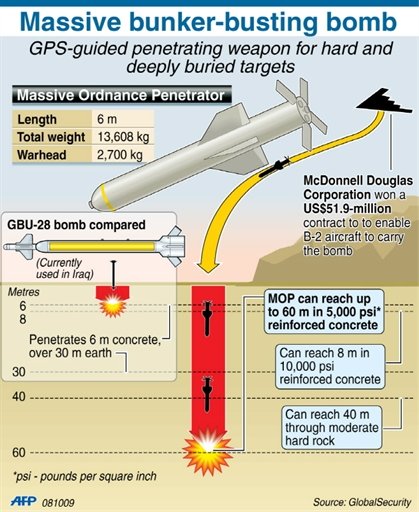
Can the effect of a "bunker buster" be accurately predicted, in relation to the target's compressive strength?

Posted: 22 Feb 2018 03:01 AM PST

This infograph picqued my interest; apparently there's a sharp (exponential?) decrease of the projectile's effectiveness with an increase in compressive strength.

Newton's approximation for impact depth won't work with such slow impacts, but can a reasonably accurate prediction be made when the target's compressive strength is known?

For instance, how would the GBU-28 and GBU-57 fare against targets such as Kosvinsky Mountain or Cheyenne Mountain?
Given the compressive strength of granite is much higher, between 100-250 MPa (~14,000 to 36,600 PSI), I'd assume they effect would be miniscule.

submitted by /u/VegetableCell
[link] [comments]

Is there any evidence to suggest that biracial people are less susceptible to genetic diseases?

Posted: 22 Feb 2018 05:52 AM PST

Being that they are created from very different gene pools.

submitted by /u/HeyItsTman
[link] [comments]

How does homolytic fission make radicals? Don't both of the atoms still have the same amount of electrons before the covalent bond and after the bond is split?

Posted: 22 Feb 2018 05:29 AM PST

I was in a chemistry lesson a week ago and asked this to my teacher who then responded to me saying it wouldn't be in the syllabus but im still really curious

submitted by /u/bilayo
[link] [comments]

How can we hear when someone is smiling?

Posted: 21 Feb 2018 06:48 PM PST

I listen to a lot of podcasts, and I can always hear when someone is smiling, even though I've sometimes never seen this person nor sometimes even heard the person before. It seems to be an intuitive thing. So what is it about the changes in speech that indicate to our (subconscious?) brain that the other person is smiling?

I put this under Neuroscience because I'm sure it has something to do with how our brain processes language, but if there's a better flair to use, I can change it.

submitted by /u/garzai_mit
[link] [comments]

What happens if a natural gas deposit in the ground ignites?

Posted: 21 Feb 2018 04:21 PM PST

How does the Hubble Telescope take pictures?

Posted: 21 Feb 2018 02:25 PM PST

I know in photography to take pictures you need to be standing still to not blur the image, you also need to (depending on your exposure and a bunch of other factors) also keep it still for that factor. So how does it take clear photos?

submitted by /u/boshdalek
[link] [comments]

Do genetics influence the way one's voice sounds?

Posted: 22 Feb 2018 02:48 AM PST

[Physics] What makes us distinguish between hollow and solid objects so easily by just tapping the surface?

Posted: 21 Feb 2018 10:59 PM PST

I want to understand the physics of what makes both of those sounds sound so different. Is it because of different frequencies present in them? If so which frequencies are present in sounds created by solid objects and which ones are present in the sounds created by hollow objects.

submitted by /u/SpecialistProblem
[link] [comments]

Wednesday, February 21, 2018

Ask Anything Wednesday - Biology, Chemistry, Neuroscience, Medicine, Psychology

Ask Anything Wednesday - Biology, Chemistry, Neuroscience, Medicine, Psychology


Ask Anything Wednesday - Biology, Chemistry, Neuroscience, Medicine, Psychology

Posted: 21 Feb 2018 07:07 AM PST

Welcome to our weekly feature, Ask Anything Wednesday - this week we are focusing on Biology, Chemistry, Neuroscience, Medicine, Psychology

Do you have a question within these topics you weren't sure was worth submitting? Is something a bit too speculative for a typical /r/AskScience post? No question is too big or small for AAW. In this thread you can ask any science-related question! Things like: "What would happen if...", "How will the future...", "If all the rules for 'X' were different...", "Why does my...".

Asking Questions:

Please post your question as a top-level response to this, and our team of panellists will be here to answer and discuss your questions.

The other topic areas will appear in future Ask Anything Wednesdays, so if you have other questions not covered by this weeks theme please either hold on to it until those topics come around, or go and post over in our sister subreddit /r/AskScienceDiscussion , where every day is Ask Anything Wednesday! Off-theme questions in this post will be removed to try and keep the thread a manageable size for both our readers and panellists.

Answering Questions:

Please only answer a posted question if you are an expert in the field. The full guidelines for posting responses in AskScience can be found here. In short, this is a moderated subreddit, and responses which do not meet our quality guidelines will be removed. Remember, peer reviewed sources are always appreciated, and anecdotes are absolutely not appropriate. In general if your answer begins with 'I think', or 'I've heard', then it's not suitable for /r/AskScience.

If you would like to become a member of the AskScience panel, please refer to the information provided here.

Past AskAnythingWednesday posts can be found here.

Ask away!

submitted by /u/AutoModerator
[link] [comments]

is it possible to move an object in circular motion using magnets?

Posted: 21 Feb 2018 06:33 AM PST

hello I'm trying to make a device which uses magnetism. my device is like a windmill but instead, I'm planning to use magnets to move the blades. I created a miniature using a pc fan and a dynamo generator. So far it doesn't work. Is it possible to move an object in circular motion with the use of two opposite magnetic poles?

submitted by /u/Shiniross
[link] [comments]

If the moon was created from an impact with Earth, could there be “Earth rocks” deep within the Moon?

Posted: 20 Feb 2018 09:57 PM PST

Could we learn about early Earth geology with rocks we found on the Moon?

submitted by /u/MindCologne
[link] [comments]

Whats the truth about applying water to burns? Will cold water cause it to blister or stifle it? What about lukewarm water?

Posted: 20 Feb 2018 06:17 PM PST

If capacitance increases as distance between plates decreases, why aren't there very small 1F capacitors?

Posted: 21 Feb 2018 06:41 AM PST

Is there a point where we cannot bring the plates any closer (engineering problem)?

submitted by /u/j_pierce3
[link] [comments]

What happens to the spin of an electron when it leaves a nucleus?

Posted: 21 Feb 2018 05:31 AM PST

Lets say a photon collides with an atom, causing an electron on the outer shell to be knocked from orbit.

From a classical sense, I would assume it takes some amount energy to change the spin of a particle, and that this amount of energy would depend on how far it's rotated. But, if an electron flies off of a nucleus, there could potentially be a magnetic field in ANY direction that the electron will then encounter. This means that the electrons spin could change to be oriented in any direction after it leaves the nucleus.

Now, please correct me if I am wrong, but if I am right that changing the spin takes energy based on how much it has been rotated, there is a violation of energy conservation somewhere here, as the photon would contribute a quantized amount of energy that wouldn't be able to account for the future measurement at an arbitrary angle with respect to its original orientation.

Or, am I wrong about energy and if the spin on the electron was originally up, will it just be measured as up in the magnetic field?

Thanks!

submitted by /u/Tablecork
[link] [comments]

If both the liver and the kidney are filtering organs, what are their different responsibilities? Are there other organs that perform similar functions?

Posted: 20 Feb 2018 06:05 PM PST

I know that the liver does about a million different things and secretes bile, while kidneys remove urea, but are there any overlapping functions?

submitted by /u/OgreAttack
[link] [comments]

Are there positions of a chess board that are impossible to achieve legally?

Posted: 20 Feb 2018 03:15 PM PST

If I were to pick up a bunch of chess pieces and put them arbitrarily onto the board, is it possible for me to arrange them in such a way that two players could not eventually create the same state from the start of a game? Assuming a legal number of each piece, obviously.

submitted by /u/AndrewBot88
[link] [comments]

Are there any materials that only allow radio waves to pass through in one direction?

Posted: 20 Feb 2018 06:12 PM PST

Basically the title. I'm curious to see if there any materials that block radio waves coming in from one direction, but completely reject them from the opposite direction. If not in the radio part of the spectrum what about other parts of the em spectrum?

submitted by /u/BigDaddyDeck
[link] [comments]

What triggers beta particles to form, and for what reason can they not penetrate substantially thick aluminium?

Posted: 21 Feb 2018 07:56 AM PST

Why do martian rovers last so much longer than planned?

Posted: 20 Feb 2018 07:58 PM PST

It almost seems as if NASA underestimates the missions durations on purpose to then be able to say that some rover lasted X times more than planned.

Like Spirit who was only supposed to last 90 days, I find it hard to believe that the sent a super expensive robot to another planet and only expected it to work for a months and a half. Instead its 6 years of operational time seem more reasonable, even a little less than expected.

So does NASA underestimates on purpose or what?

submitted by /u/Frigorifico
[link] [comments]

Why does water make paper products translucent?

Posted: 20 Feb 2018 04:05 PM PST

What was going on in the science community when the first dinosaur bones were discovered? Did we realize early on what we were looking at? What was the attitude of the community towards the discovery?

Posted: 20 Feb 2018 09:09 AM PST

This is always something I have wondered and been fascinated with more so than the discovery itself. It had to have been something that shook the community to it's bones (pun intended)

submitted by /u/JustinSchwimmer
[link] [comments]

How exact do orbital speeds need to be so you don't fly off into space (too fast) or fall into the atmosphere (too slow)?

Posted: 20 Feb 2018 08:05 PM PST

How did chemists determine the structures of molecules before they had high power microscopes?

Posted: 21 Feb 2018 02:40 AM PST

How are the eggs of birds formed and what is the process called? Are they formed to the size that they are eventually hatched?

Posted: 20 Feb 2018 05:36 PM PST

Is there a theoretical limit to how many protons an atom can contain?

Posted: 20 Feb 2018 12:35 PM PST

I'm very interested in physics, but mainly study it by myself on the Internet. I see in the periodic table that new elements are made in particle accelerators, by bombarding an element with other particles. So is there a limit to how heavy an element can be, or could we in the future discover a stable element much heavier than we know today?

submitted by /u/Valle37
[link] [comments]

How do scientists assess/prove the age of ancient foot prints?

Posted: 21 Feb 2018 12:26 AM PST

I seem to see a news article about every two or three months about archeologists finding a set of foot prints that are tens to hundreds of thousands of years old. Example article How do they determine how old the foot prints are? Thanks!

submitted by /u/lojafan
[link] [comments]

What physically happens inside a computer when it crashes or freezes?

Posted: 20 Feb 2018 03:24 PM PST

At what frequency does a repetitive sound become a solid sound?

Posted: 20 Feb 2018 10:43 AM PST

For instance, if you were able to beat a drum fast enough, at what BPM would it sound like a continuous noise?

submitted by /u/ATLBMW
[link] [comments]